Is Ironing Better Than Steaming for Clothes?
Is ironing better than steaming? Compare crease removal, fabric care and speed to choose the right finish for workwear and everyday clothes at home, easily.
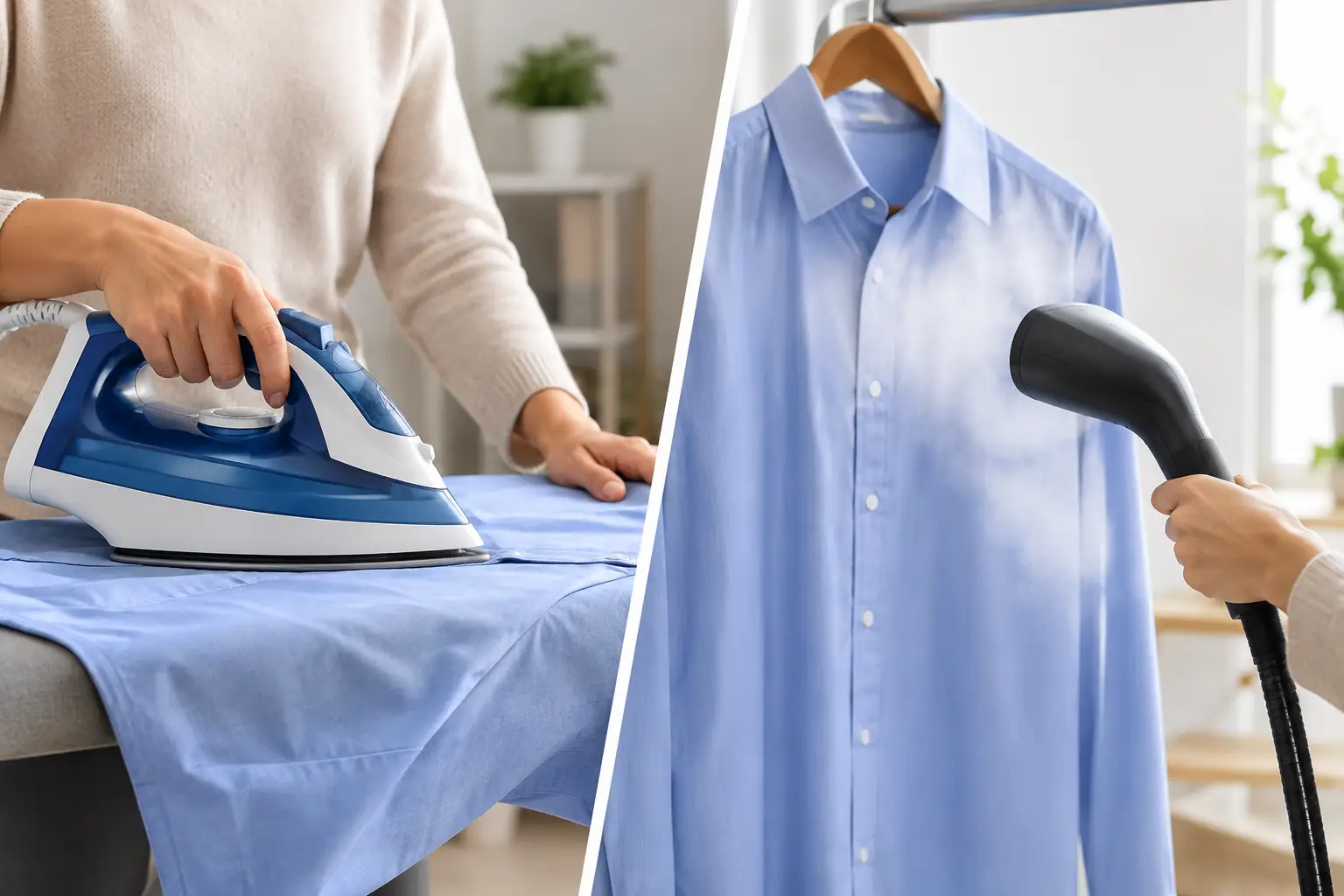
A shirt can be clean, dry and still not feel ready for the day. The collar curls, the placket puckers and the creases across the front catch the light just as you are heading out. So, is ironing better than steaming? Usually, ironing gives a sharper, longer-lasting finish, while steaming is the quicker choice for refreshing clothes between proper washes or presses.
The right answer depends less on which tool is ‘best’ and more on the garment, the finish you need and the time you have. A tailored cotton shirt before an important meeting has different needs from a creased dress pulled from a suitcase or a jumper that simply needs freshening up before dinner.
Is ironing better than steaming for a crisp finish?
For a neat, structured result, ironing is hard to beat. The soleplate applies direct heat and light pressure to fabric, flattening stubborn creases and creating defined lines where they belong. That is why ironing works particularly well on cotton shirts, trousers, linen, school uniforms and bedding.
It is also the better option when details matter. A well-pressed collar sits properly, cuffs look tidy and trouser creases appear intentional rather than accidental. If you like your workwear looking polished from your morning commute through to the end of the day, an iron generally gives the finish you are after.
Steaming works differently. Rather than pressing fabric flat, it uses hot steam to relax fibres and release lighter wrinkles. This makes it excellent for garments that need a softer, natural drape. A steamer can quickly improve the appearance of a blouse, dress, light knitwear or jacket without leaving a sharp pressed line.
The trade-off is simple: steam does not offer much control over shape. It can soften creases, but it is unlikely to produce the flat front and clean edges of a freshly ironed shirt. For deeply set wrinkles, particularly in cotton and linen, you may need to steam the item more than once, and the result may still be less precise.
When steaming is the more practical choice
A steamer earns its place because it is fast and forgiving. You can often use it with a garment hanging on a hanger, which avoids setting up an ironing board for one item. For busy London mornings, that can make the difference between wearing the outfit you wanted and reaching for the easiest clean thing in the wardrobe.
It is especially useful for clothes that should not be heavily pressed. Delicate fabrics, pleated garments, embellished pieces and items with a looser shape can be awkward to iron. Direct contact and too much heat can leave shine, flatten texture or create new marks. Steaming from a short distance is often gentler, although you should still check the care label first.
Travel is another strong case for steaming. Clothes folded into an overnight bag rarely emerge perfectly smooth. A compact steamer can take the worst of the creasing out of a dress, blazer or shirt in a few minutes, without the uncertainty of an unfamiliar hotel iron.
Steaming is also helpful when a garment is not dirty but needs to look more presentable. A jacket worn briefly, a dress tried on before an evening out or curtains that have picked up folds can all benefit from a quick refresh. It is a practical finishing tool, not always a replacement for a proper press.
Where ironing does the job steam cannot
Ironing is better for garments made to look structured. Think office shirts, formal trousers, fitted cotton dresses and linen pieces. Steam relaxes fabric, whereas an iron lets you shape it. You can press seams open, flatten pocket edges and keep collars and cuffs looking neat.
Heavier fabrics also respond well to ironing. Denim, thick cotton and linen tend to hold strong creases, particularly after air drying. A little moisture or steam from the iron, combined with steady pressure, is usually more effective than holding a handheld steamer over the same area repeatedly.
An iron can be more efficient when you have several items to finish. Setting up the board takes a moment, but pressing a batch of shirts, trousers and pillowcases in one go is often faster than steaming every panel individually. The result is more consistent too.
That said, ironing asks more of you. It needs a clear surface, attention to temperature settings and enough time to work through each section. Rushing increases the risk of pressing in creases or leaving an unwanted shine on dark fabrics. For many households, this is exactly the task that slips to the bottom of the weekend list.
Fabric care matters more than the appliance
Neither method is automatically safe for every garment. The label is your starting point, especially for silk, wool, viscose, delicate synthetics and clothing with trims. If ironing is permitted, use the recommended heat setting and turn dark or delicate items inside out where appropriate. A pressing cloth can provide an extra layer of protection for fabrics that mark easily.
With steam, avoid soaking the fabric. Hold the steamer upright and let the steam move across the garment rather than concentrating it in one spot. Give the item time to dry before wearing or putting it away, otherwise fresh wrinkles can form as the fabric settles.
Some garments are better left to professional care. Tailored suits, formalwear, intricate dresses and pieces with uncertain care labels can be difficult to handle at home. The goal is not simply to remove a crease but to preserve the shape, texture and finish that made you buy the item in the first place.
Choose by the occasion, not by habit
If you are preparing a shirt for a client meeting, a job interview or a formal event, iron it. You will get cleaner lines and a more considered appearance. The same applies to linen before a summer occasion, although linen naturally relaxes as it is worn, so perfection may not last all day.
If you are refreshing an outfit before a dinner reservation, smoothing a dress after travelling or tidying a light blouse before work, steaming is likely to be quicker and easier. It is also a sensible option for garments that look better with a soft finish rather than a crisp one.
For many wardrobes, the best approach is to use both. Iron the pieces where precision matters, and use a steamer for quick touch-ups and more delicate fabrics. That combination keeps everyday clothing manageable without treating every item as a full ironing project.
When you would rather skip both
There is no prize for spending Sunday evening at an ironing board. If laundry is already competing with work, family plans and your commute, professional ironing can remove the most time-consuming step while giving clothes the finish they need.
LaundryZone collects and returns garment-care orders from homes and chosen locations across Central London and selected surrounding areas, subject to postcode availability. You can select the service, itemise your order and pay online, then leave the pressing to people who handle clothes all day. Eligible orders may be returned within 24 hours, which is useful when the week has got away from you.
The practical choice is the one that suits the garment and your schedule. Steam the pieces that need a quick, gentle reset; iron the ones that need definition; and make room in your day for something other than chasing creases.
Rather not do the laundry at all?
We collect, wash, press and deliver it back to your door.
See our servicesKeep reading

Digital Laundry Ordering That Fits Your Day
Digital laundry ordering lets you book collection, itemise garments and pay online, so professional cleaning fits around work, family and London life.

How to Schedule Private Laundry Pickup in London
Schedule private laundry pickup in London with doorstep collection, clear itemisation and return delivery for laundry, dry cleaning and ironing with ease.
Wedding Dress Cleaning: What to Do After the Day
Wedding dress cleaning protects delicate fabric, trims and memories. Learn when to book, what to tell a specialist and how to store your gown properly.