Wedding Dress Cleaning After Your Wedding Day
Wedding dress cleaning protects delicate fabric, trims and memories. Learn when to book, what to tell a specialist and how to store your gown after.
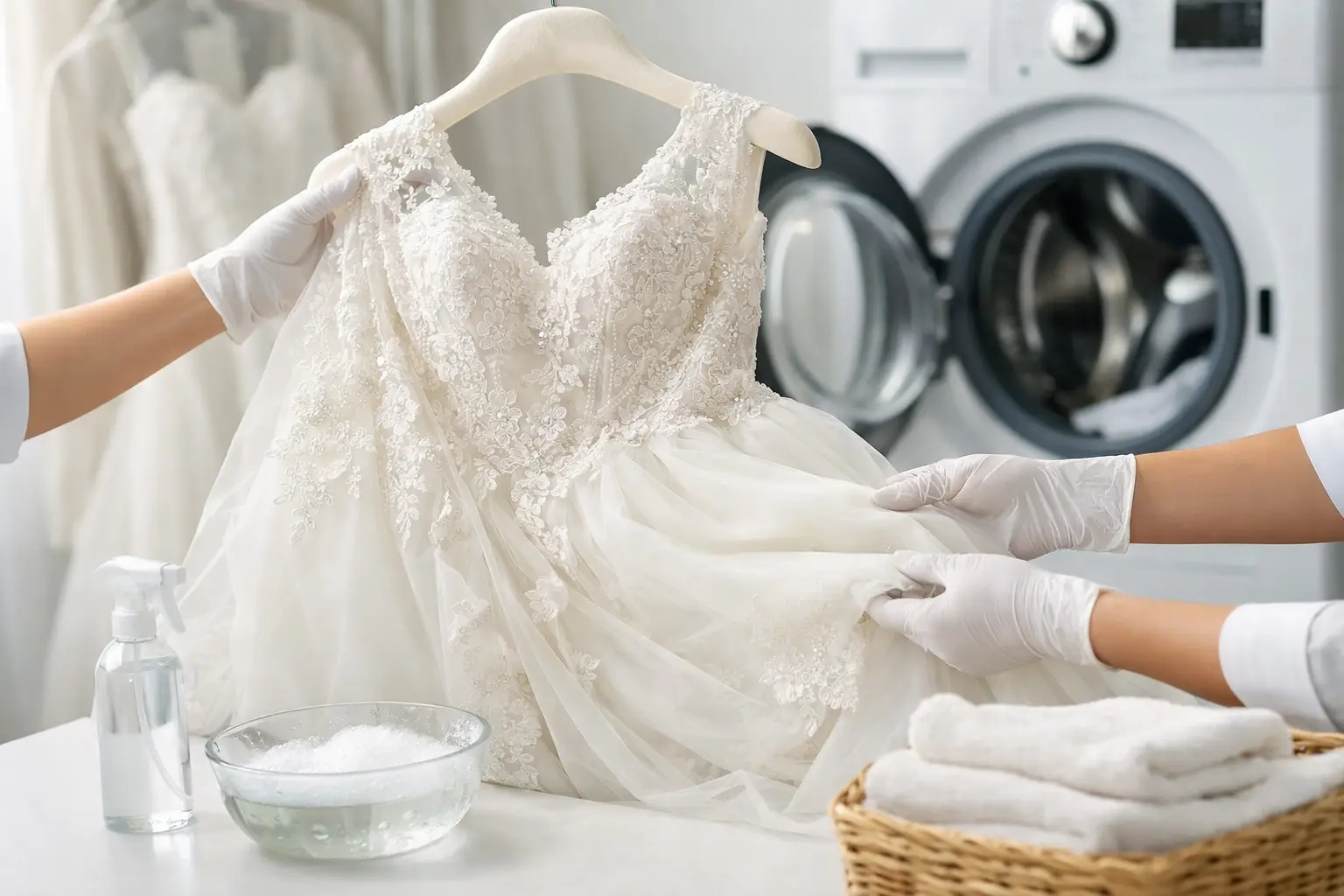
A champagne splash on silk, grass around the hem and make-up on the neckline are signs of a wedding well enjoyed. They are also reasons not to leave wedding dress cleaning until the gown has been hanging in a wardrobe for months. The sooner a specialist sees the dress, the better the chance of lifting marks before they settle into delicate fibres.
Your dress may only have been worn once, but it deserves more care than an ordinary dry-cleaning item. Wedding gowns often combine several fabrics, hand-finished details and hidden structure in one garment. A careful cleaning plan protects the look you chose for the day, whether you plan to keep it, pass it on or sell it.
Why wedding dress cleaning needs a specialist approach
A wedding dress is rarely made from one straightforward material. It may have a satin lining, a tulle skirt, lace appliqué, beading, boning, buttons and a train that collected dust throughout the day. Each part can react differently to moisture, heat and cleaning solutions.
That is why the label alone does not tell the full story. A professional cleaner should inspect the whole gown, including the underside of the hem, underarms, bodice, straps and any areas hidden by layers. They can identify whether marks are likely to be food, drinks, make-up, mud or tan, then choose a suitable treatment rather than applying a one-size-fits-all process.
This matters most with stains you cannot easily see. White wine, clear fizzy drinks and sugar-based spills can dry without leaving an obvious mark, then turn yellow or brown over time. Perspiration and body oils can do the same, particularly around the neckline and underarms. Cleaning soon after the wedding gives those marks less time to oxidise.
Professional cleaning is not a promise that every trace will disappear. Old stains, fabric damage and colour transfer can be difficult to reverse. What it does offer is the safest, most considered route for treating the dress without causing further damage through home methods.
When should you book wedding dress cleaning?
Aim to arrange collection within a few days of the wedding, especially if the dress has visible marks or a heavily soiled train. If you are going straight on honeymoon, ask someone you trust to hang the gown properly in a cool, dry room and arrange cleaning when you return. Avoid leaving it folded in a bag, a car boot or a damp corner of the house.
There is no need to panic if a few weeks have passed. A specialist can still assess the gown and advise on likely results. But waiting for a first anniversary, a house move or a future sale makes treatment less predictable. Stains change with time, and creases become harder to remove safely from embellished or structured areas.
If the gown needs altering after the wedding, perhaps to shorten it for another event, have it cleaned first. Marks on the hem and bodice are easier to assess before fabric is cut or reshaped.
Before collection, do three simple things
First, take clear photos of the dress, including any stains or damage you noticed during the day. This gives you a useful record and helps you describe particular concerns.
Next, keep any spare beads, buttons, straps, belts or detachable sleeves together in a labelled envelope. If your dress came with care instructions from the designer or boutique, include those too. The more information available, the more confidently the garment can be handled.
Finally, do not try to spot-clean the gown with stain remover, washing-up liquid or baby wipes. Rubbing can spread a stain, weaken lace and leave a residue that complicates professional treatment. Even plain water can leave rings on silk or satin.
What happens during professional dress cleaning?
The process should begin with an inspection, not a quick trip to a standard wash cycle. The cleaner checks the care label, fabric types, construction and embellishments, then records areas requiring attention. Loose beads, fragile trims and pre-existing damage should be considered before cleaning starts.
Stains are normally treated individually, using methods chosen for the fabric and the type of mark. The gown is then cleaned using the method judged safest for its construction. Depending on the dress, that may involve specialist dry cleaning, gentle wet cleaning or a combination of careful hand treatment and controlled cleaning.
Afterwards, the garment is checked again, pressed or steamed where appropriate, and prepared for return. A good finish is about more than making the dress look fresh in photographs. It should restore its shape without flattening texture, scorching delicate fabric or putting unnecessary strain on beading.
For busy couples, the practical part matters too. LaundryZone can collect your gown from home or a chosen location, with online booking, itemised orders and return delivery designed to fit around work, travel and the post-wedding to-do list. Check availability for your postcode before booking, and flag that the item is a wedding dress so it receives the right assessment.
Questions to ask before handing over your gown
You should feel comfortable asking how the dress will be assessed and whether the cleaner has experience with delicate occasionwear. Explain any stains you know about, including invisible spills, fake tan, perfume, cake icing or mud from outdoor photographs. Mention if the dress has sentimental details, a family veil, coloured embroidery or a particularly fragile train.
It is also sensible to ask about turnaround time and how the dress will be returned. A fast service can be helpful, but care should come before speed for a gown with extensive embellishment. If you need the dress back for a post-wedding shoot, resale appointment or alteration, say so when arranging the order rather than assuming it can be rushed later.
Price can depend on the style and construction of the gown. A simple crepe dress may need a different level of work from a full skirt with lace, sequins and a long train. Transparent itemisation makes it easier to understand what is being cleaned and why.
Cleaning versus preservation: choose based on your plans
Cleaning removes wear from the day. Preservation is about long-term storage after cleaning. They work well together, but they are not the same service.
If you are selling or donating the dress, professional cleaning followed by breathable, protective packaging may be enough. Store it somewhere dry and away from direct sunlight until it is collected or photographed. Be honest with a buyer about any permanent marks or repairs.
If you are keeping the gown, preservation is worth considering. The dress should be completely clean and dry before being placed in suitable archival tissue and a storage box designed for delicate textiles. Avoid ordinary plastic garment bags for long-term storage because they can trap moisture. Also avoid attics, garages and basements, where temperature changes and damp can affect fabric.
A hanging gown needs support. Heavy skirts can pull on straps or bodices over time, so ask about the best storage position for your particular design. Some dresses are better stored flat or carefully folded with acid-free tissue between layers. It depends on the weight of the fabric, the construction and the embellishments.
Do not forget the veil and accessories
Veils, capes, overskirts and detachable sleeves can pick up make-up, hair product and dust just as easily as the dress. Tell the cleaner about every matching piece, particularly if it contains lace, pearls or fine netting. Shoes may need a separate service, while jewellery should normally be cleaned according to its own material and never left attached to the dress.
A small decision that protects a big memory
Your wedding dress does not need to be perfect to be worth caring for. A faint mark may remain, and a repaired hem may tell part of the story of the day. Booking professional cleaning promptly simply gives the gown its best chance of looking beautiful for whatever comes next, without adding another errand to an already busy week.
Rather not do the laundry at all?
We collect, wash, press and deliver it back to your door.
See our servicesKeep reading

Digital Laundry Ordering That Fits Your Day
Digital laundry ordering lets you book collection, itemise garments and pay online, so professional cleaning fits around work, family and London life.

How to Schedule Private Laundry Pickup in London
Schedule private laundry pickup in London with doorstep collection, clear itemisation and return delivery for laundry, dry cleaning and ironing with ease.

Wedding Dress Cleaning: What to Do After the Day
Wedding dress cleaning protects delicate fabric, trims and memories. Learn when to book, what to tell a specialist and how to store your gown properly.