Professional Ironing Versus Home Ironing
Professional ironing versus home ironing comes down to finish, fabric care, time and convenience. Compare both options and decide which approach works best for your clothes and weekly routine.
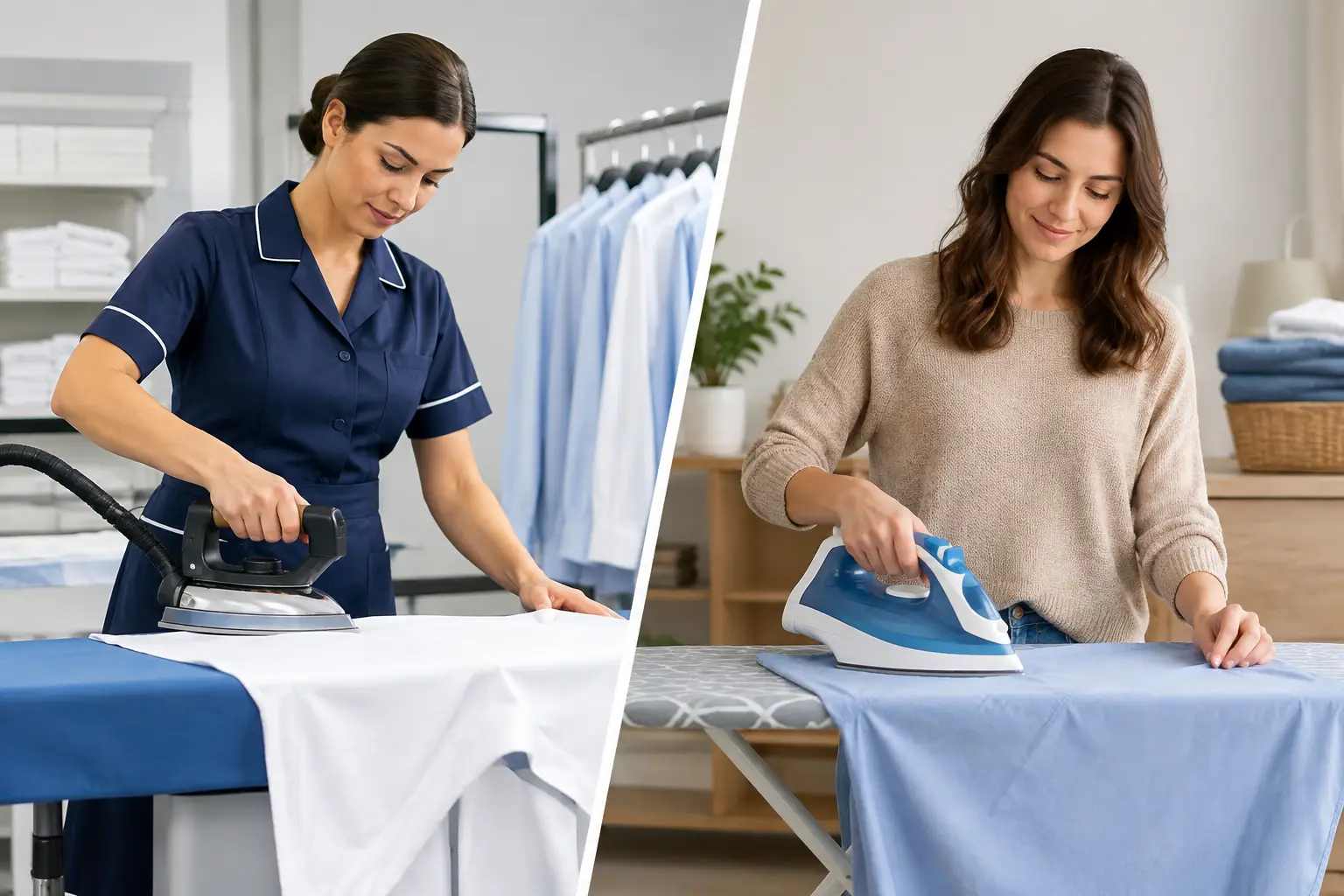
A shirt can look clean yet still feel unfinished when the collar curls, the placket puckers or a new crease appears before you have left the house. That is the practical difference at the heart of professional ironing versus home ironing. Both can keep clothes presentable, but they ask for very different things from your time, equipment and attention.
For a quiet Sunday reset, ironing at home can make perfect sense. For a full household basket, a run of office shirts or garments you need looking sharp for an event, handing it over can be the easier choice. The best option is not always about whether you own an iron. It is about the finish you need, the fabrics you wear and how much of your week you are willing to spend at the ironing board.
Professional ironing versus home ironing: the real difference
Home ironing gives you control and costs little beyond electricity, water and the equipment you already have. You can deal with one blouse before work, press a pair of trousers for dinner or touch up a crease just when you need to. If you enjoy the routine and have a reliable steam iron, it is a perfectly useful household skill.
Professional ironing is designed for consistency at scale. Trained garment-care teams work with purpose-built equipment and a repeatable process, rather than a domestic board squeezed between other jobs. They can press garments evenly, shape collars and cuffs properly, and return items ready to wear or store.
The difference is especially noticeable with a large load. Ironing ten shirts at home is rarely just ten shirts. It is sorting them, checking care labels, filling the iron, waiting for it to heat up, adjusting the board, working around buttons and hanging everything afterwards. A task that looks manageable can take a sizeable part of an evening.
The finish: why pressed clothes look different
A good home iron can produce excellent results, particularly on cotton T-shirts, simple bedding and casual items. The key is using enough steam, choosing the right heat and taking time to work section by section. Rushing is usually when shine marks, accidental folds and missed areas happen.
Professional pressing tends to deliver a more uniform finish because the process is built around garment shape. Shirt collars sit cleanly, cuffs hold their form and trouser creases look deliberate rather than temporary. Steam is applied with control, and items are handled in a way that reduces fresh wrinkles while they cool.
This matters most for workwear and occasionwear. A crisp shirt or smooth dress can make getting ready feel simpler, especially when you are moving from a commute to a meeting or heading straight out after work. It is less about chasing perfection and more about removing one more decision from a busy morning.
Not every garment needs a professional press
There is no need to outsource every item you own. Everyday jersey, relaxed linen and clothes intended for home wear may only need a quick refresh, if any ironing at all. Some fabrics are meant to have texture, and pressing them heavily can work against the look.
The value rises with structured garments, delicate pieces and volume. Think cotton shirts, tailored trousers, pleated skirts, school uniform, formal dresses and items that have sat folded in a drawer. These are the clothes where a careful press is more visible and where mistakes are more frustrating.
Fabric care and the risk of getting it wrong
The home-iron challenge is not simply heat. Different fibres respond differently to heat, moisture and pressure. Cotton can often take more heat than silk. Wool usually benefits from steam and a protective layer between the fabric and the iron. Synthetics can melt, flatten or develop a shine if treated too aggressively.
Care labels offer a useful starting point, but they do not make the job automatic. A mixed-fabric shirt, a printed top or a garment with trims still needs judgement. You also need to know when ironing is not appropriate at all. Some pieces need low heat, steaming at a distance or specialist cleaning rather than direct pressing.
Professional garment care reduces that uncertainty. Items can be assessed before pressing, with techniques adjusted for the fabric and construction. That does not mean every delicate item should be ironed, but it does mean there is a clearer process for deciding what treatment is suitable.
At home, a few habits help protect clothes: check the label, test a hidden area if you are unsure, use a pressing cloth for delicate fabrics and avoid leaving a hot iron in one place. These small steps take time, but they can prevent a permanent mark on a garment you wear often.
Time, effort and the hidden cost of home ironing
The financial comparison is not only the price of a service against the cost of using your own iron. It is also the value of your time. Someone with a predictable evening routine may find an hour of ironing manageable. A parent handling uniforms, a commuter with long days or a student balancing deadlines may see that hour very differently.
There is also the mental load. Ironing often stays on the list because it is easy to postpone. Then the basket grows, you run out of ready-to-wear shirts and the job becomes an urgent late-night task. Professional ironing can be useful precisely because it creates a dependable reset point in the week.
For London households, collection and delivery can change the calculation further. Rather than carrying a bag to a shop or planning a separate trip, you can arrange garment care around your schedule. LaundryZone collects from home or a chosen location, processes itemised orders and returns them ready to use, with availability confirmed by postcode.
When home ironing is the better choice
Home ironing remains the sensible option when you only have a few straightforward pieces and need them immediately. It is also useful for quick touch-ups after travel, refreshing a cuff before an interview or pressing linen that you prefer to handle yourself.
It can be cheaper for light, occasional use, particularly if you already own a good iron and board. And some people genuinely find the process satisfying. If you have the time, space and confidence with different fabrics, there is no reason to replace a routine that works.
The trade-off is consistency. Home results depend on your technique, the condition of your equipment and whether you can give the job your full attention. A worn ironing-board cover, limescale in the iron or a rushed approach can make even freshly washed clothes look less polished.
When professional ironing earns its place
Professional ironing is most useful when the quantity, quality or urgency of the garments makes DIY less appealing. It can be a practical choice before a busy work week, after holiday packing, ahead of a wedding or whenever the laundry pile has got away from you.
It is also worth considering if your wardrobe contains pieces that are easy to damage or difficult to press neatly. Pleats, tailored seams, crisp cotton and delicate fabrics demand more patience than a basic T-shirt. Paying for care can be preferable to replacing an item after one avoidable mishap.
A service is not automatically the right answer for every basket. If you only need one casual top pressed, arranging professional care may be more than you need. But for regular batches, the convenience can be considerable: select the service, itemise the order, pay online and get on with the rest of your day.
How to choose for your household
Start with your real weekly pile, not the ideal version of your routine. How many items need pressing? Are they mainly simple clothes, or are they work shirts and structured pieces? Do you have a clear hour to spare, or are you regularly ironing at the last minute?
Then consider the level of finish that matters to you. A home press may be entirely right for casual wear. For clothes that need to look reliably smart, professional care can offer more predictable results and take a repetitive job off your hands.
The most practical approach is often a mix. Keep the iron for quick fixes and occasional jobs, then use professional ironing when the basket is bigger, the garments are more demanding or your calendar leaves no room for another chore. Clothes should support your plans, not delay them.
Rather not do the laundry at all?
We collect, wash, press and deliver it back to your door.
See our servicesKeep reading
Wedding Dress Cleaning: What to Do After the Day
Learn when to arrange wedding dress cleaning, how to prepare your gown, what to tell the cleaner and how to store it safely after the wedding.

Laundry App: A Simpler Way to Manage Clothes
A laundry app makes garment care easier with online booking, clear itemisation, secure payment and convenient collection and delivery around your schedule.

Professional Garment Cleaning That Saves You Time
Professional garment cleaning helps busy London households care for everyday clothes, workwear and delicate pieces with convenient collection and delivery.