Safe Trainer Washing Without Ruining Your Shoes
Learn how to wash trainers safely, which materials need extra care, when to avoid the washing machine and how to dry shoes without damage.
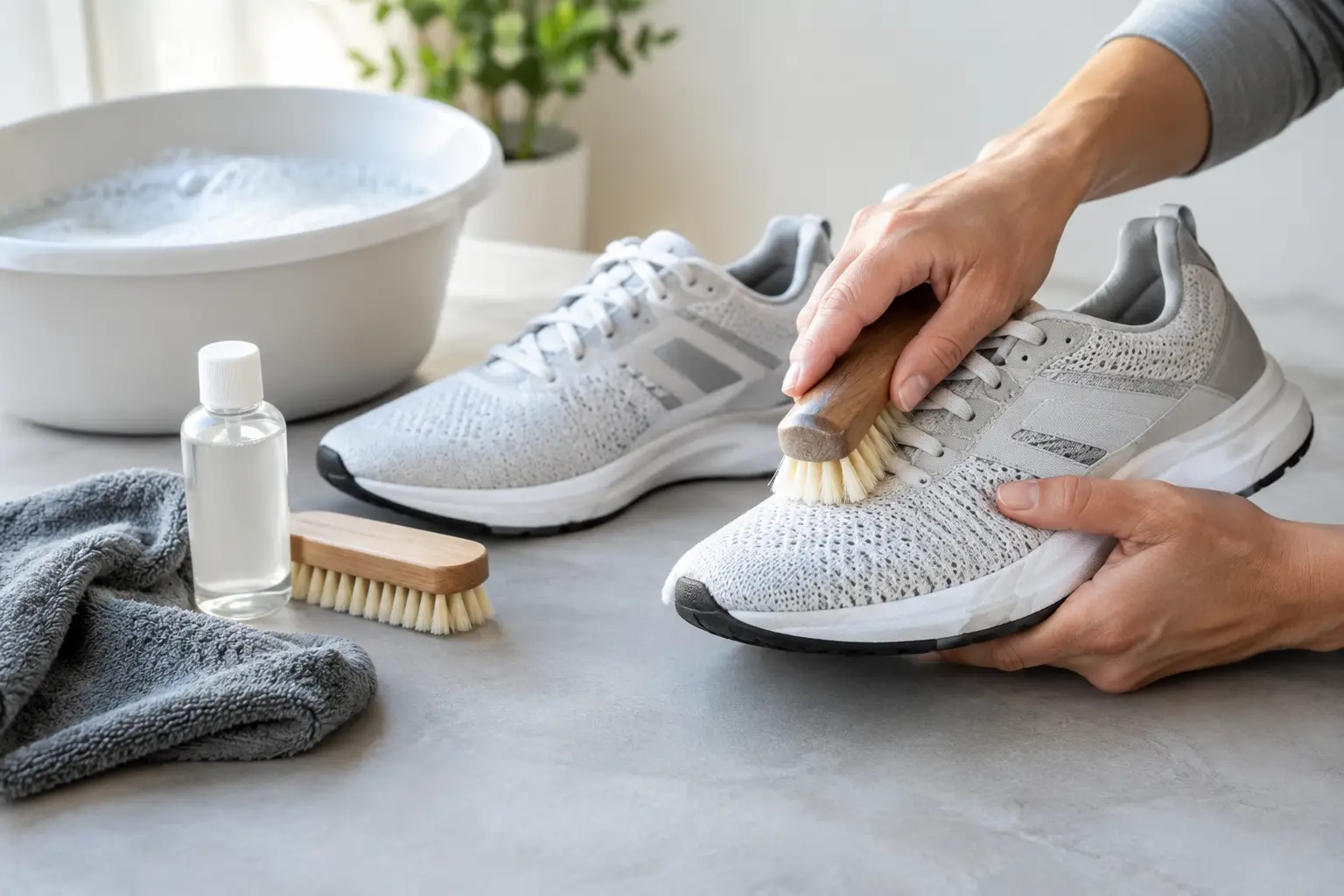
Mud on the suede, a splash of coffee on the canvas, or a commute’s worth of city grime can make even your favourite pair look tired. Safe trainer washing is less about finding the strongest cleaning product and more about knowing what your shoes are made of, how they are constructed and when to stop before a small mark becomes lasting damage.
Trainers are rarely made from one simple material. A single pair may combine fabric, leather-effect panels, foam, mesh, rubber, adhesive and coloured trims. Each part reacts differently to water, heat and friction. That is why a quick cycle in the washing machine can be fine for one old pair and a costly mistake for another.
Safe trainer washing starts before any water
Check the care label, box or manufacturer guidance first, especially for newer, premium or performance trainers. If the maker says not to machine wash, take that seriously. The risk is not only fading or shrinking. Excess water and tumbling can weaken glued soles, warp cushioning and leave shoes slow to dry properly.
Then identify the main upper material. Canvas and some synthetic fabrics are usually the most forgiving. Leather, suede, nubuck and delicate mesh need a gentler approach. Trainers with reflective finishes, printed graphics, metal details, glued-on decorations or light-up elements should not be treated as ordinary fabric shoes.
Before cleaning, remove loose surface dirt with a dry, soft brush or cloth. This small step matters. Rubbing wet grit into the upper can push dirt further into the material and create scuffing. Take out the laces and, where possible, the insoles too. Cleaning these separately gives you better access to the shoe and avoids trapping moisture inside.
If there is a care instruction or a product you have not used before, test it on an inconspicuous area. The inside edge of the tongue is often a sensible place. Leave it to dry before deciding whether to continue. Colour transfer and water marks are much easier to prevent than correct.
When can trainers go in the washing machine?
For basic fabric trainers with no special finishes, machine washing can sometimes be an option. It is never completely risk-free, though, and hand cleaning is usually the safer choice when you want to preserve shape and colour.
If you decide a pair is suitable for the machine, use a cool, gentle cycle and a mild detergent. Put the trainers in a wash bag or pillowcase, ideally with a couple of old towels to reduce knocking around the drum. Do not add bleach or use hot water. Both can affect colour, coatings and adhesives.
Avoid machine washing leather, suede, nubuck or trainers with foam that absorbs plenty of water. The same applies to structured running shoes, shoes with air or gel components, and pairs that already show signs of a separating sole. A wash will not repair wear and may make it more noticeable.
It also pays to be realistic about age. A well-loved pair that has survived years of pavement miles may have weaker glue than it appears. Gentle cleaning may freshen it up, but no method can make worn materials new again.
Why heat causes problems
Heat is the biggest enemy of safe trainer washing. A tumble dryer, radiator or direct blast from a hairdryer can shrink fabric, crack synthetic finishes and affect the bond between the sole and upper. It can also distort the shoe so it no longer feels as comfortable as it did before.
Air drying takes longer, but it is worth the patience. Stuff each trainer loosely with plain white paper or a clean towel to help it hold its shape and absorb moisture. Replace the paper if it becomes damp. Place the pair somewhere airy, away from direct sunlight and strong heat, and allow plenty of time for the inside to dry.
Do not wear trainers while they are still damp. Apart from being uncomfortable, that can encourage odour and cause the shoe to lose its shape under pressure.
A safer hand-washing method for most pairs
For everyday canvas, fabric and many synthetic trainers, a light hand clean is normally enough. You do not need to soak the whole shoe. Use a bowl of lukewarm water with a small amount of mild detergent, then work slowly with a soft cloth or soft-bristled brush.
Clean one small section at a time. Use gentle circular movements on fabric and take extra care around seams, logos and bonded areas. A toothbrush may seem useful for tight spaces, but choose one with soft bristles and avoid vigorous scrubbing. Friction can roughen fabric and lift colour, particularly on darker shoes.
Wipe away soapy residue with a separate damp cloth rather than rinsing the trainer under a running tap. This keeps water exposure under control. Finish by blotting, reshaping with paper and leaving the pair to air dry.
Laces can usually be washed separately in warm, soapy water, then rinsed and air dried. Insoles need more caution. Wipe them with a lightly damp cloth and mild soap where suitable, but do not saturate them. If they have a strong odour, allow them to dry fully in fresh air before putting them back.
Treat leather, suede and mesh differently
The safest approach depends on the material. Leather trainers generally need minimal water. Wipe surface dirt with a soft, slightly damp cloth, then dry immediately with another cloth. Do not leave leather saturated or use harsh household sprays, as these can strip its finish or leave uneven patches.
Suede and nubuck should usually be cleaned dry first with a brush designed for those materials. Water can leave tide marks and make the texture look flat. For a stubborn mark, specialist shoe-care advice is often the better route, particularly if the pair is light-coloured or expensive.
Mesh looks simple but can be surprisingly delicate. It can snag, stretch and collect dirt inside its fine weave. Use only a small amount of water and a very soft brush or cloth. Press rather than scrub when lifting a stain. If the mark does not shift, repeated cleaning can do more harm than leaving a faint trace.
White trainers deserve a little extra restraint. Strong whitening products may make one panel look brighter than another, and they can turn yellow as the shoe ages. Clean the whole upper evenly rather than attacking one spot with a powerful product. On the rubber sole, a gentle wipe is often enough to improve the overall appearance.
Stains, smells and the point where you should pause
Treat stains as soon as you can, but avoid the temptation to apply every product in the cupboard. Bleach, nail varnish remover, washing-up liquid in heavy amounts and abrasive powders are all capable of damaging colour or finish. The cleaner is not always better just because it is stronger.
For an oily mark, blot gently with a dry cloth first. Do not rub it deeper into the material. For mud, let it dry fully, brush away what you can, then clean the remaining mark lightly. For salt marks from wet winter streets, wipe with a barely damp cloth and dry the area evenly to reduce water lines.
Odour usually means moisture has lingered inside. Remove the insoles, air the trainers out and make sure they are completely dry before storing them. Fragrance sprays may mask the problem temporarily, but they do not replace proper drying.
Pause and consider professional care if a pair is made from suede, fine leather or mixed materials, or if it has a stubborn stain on a visible area. The same applies to sentimental, limited-edition or high-value trainers. A professional assessment cannot promise every stain will disappear, but it can prevent an unsuitable home treatment from making the condition worse.
Build a routine that keeps washing to a minimum
The easiest way to wash trainers safely is not to let the dirt build up in the first place. Wipe marks after a wet commute, brush off dry mud before it sets and let shoes dry naturally after rain. Rotating between pairs also gives each one time to air out between wears.
Keep trainers in a cool, dry place rather than a damp hallway or sealed bag. If you carry a pair to the gym or work, take them out of the bag as soon as you can. A few minutes of care after wearing them is far easier than a deep clean at the weekend.
Your trainers do not need to look factory-fresh to be well cared for. Clean them gently, dry them patiently and save stronger treatment for the rare occasions when it is genuinely appropriate. That approach keeps your shoes looking good for longer, without turning a simple refresh into an avoidable replacement.
Rather not do the laundry at all?
We collect, wash, press and deliver it back to your door.
See our services